George Soros gave Ivanka's husband's business a $250 million credit line in 2015 per WSJ. Soros is also an investor in Jared's business.

Showing posts sorted by relevance for query smart growth. Sort by date Show all posts

Sunday, August 12, 2012

'Who funds UN Agenda 21/Sustainable Development?'

Everyone seeks to get in between the US taxpayer and his elected representatives. "Sustainable" advocates do this quite well and we chumps even pay for them to do so. Caring, "sustainable" government avoids the mess and expense of elections:

"WHO FUNDS UN AGENDA 21/SUSTAINABLE DEVELOPMENT?," DemocratsAgainstAgenda21.com"

"
Growing Smart Legislative Guidebook Model Statues for Planning and the Management of Change was funded by grants from the US Department of Housing and Urban Development (the lead federal agency); Federal Highway Administration (US Department of Transportation); US Environmental Protection Agency; the Federal Transit Administration (DOT); the Rural Economic and Community Development Administration (US Department of Agriculture). All of these agencies were members of the President's Council on Sustainable Development which ran from 1993-1999.

Private funders included the Siemens Corporation; Henry M. Jackson Foundation; Annie E. Casey Foundation; and the American Planning Association. These private organizations promote smart growth.

Siemens, for instance, benefits from the development of the 'smart grid' and is a key private for-profit corporation for solar, biomass, and other subsidized power generation. This huge multi-national corporation is involved in health care, building systems, financing, communications and more. Siemens USA has revenue of over $20 Billion. They also just appointed
Michael Kruklinski Head of Siemens Real Estate for the Americas. In this role he'll oversee all operations for Siemens Real Estate in the U.S. He also is on the NEW YORK CITY REGIONAL PLAN ASSOCIATION BOARD. Siemens is a German company that was nearly bankrupt until Hitler generously supplied free slave labor and money for technological development. http://www.usa.siemens.com/answers/en/

The Funders Network membership list is vast. Annie E. Casey Foundation is just one of many members. Read the membership list here: http://www.fundersnetwork.org/connect

We suggest that you look carefully at the members of the Funders' Network for Smart Growth and Livable Communities to see where the UN Agenda 21/Sustainable Development money trail leads. Money and power flow back and forth along these channels. Enterprise Community Development and LISC, for example, are on the list. They are for-profit affordable housing developers who benefit hugely from subsidies in smart growth and redevelopment (urban renewal) zones. Wal-Mart is a partner. The Orton Family Foundation is a partner. You'll find over 100 foundations and corporations on the list. Take a look. and look at this too, as an example of who funds the Smart Growth conferences.

On the issue of devaluation of property through regulatory means, we find it reprehensible that counties and cities recognize that development rights have value when they're being purchased in conservation easements, but they have no value when they're being taken away through regulations. You won't find many General or Comprehensive Plans that don't embed sustainable communities strategies in their elements. Most states require it by law through their legislation.
These policies fund and support UN Agenda 21/Sustainable Development.

More and more non-profit organizations are being created, fragmenting from others, spinning off and creating more non-profits. Funding comes from state and federal grants, from your taxes and fees, private grants, donations (tax write-offs), and from lawsuits. You'll find the League of Women Voters advocating for Smart Growth. The Lung Association lobbies for Smart Growth. The National Association of Realtors advocates for Smart Growth. The Chamber of Commerce does too. So does the AFL-CIO. Are your dues or professional fees paying for UN Agenda 21/Sustainable Development. Are you volunteering for a group supporting UN Agenda 21/Sustainable Development?

SPEAK OUT. REFUSE TO PAY OR PAY UNDER PROTEST, AND TELL THE MEMBERSHIP WHY YOU ARE TAKING ACTION.

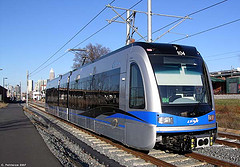
Here's a light rail train made by ....Siemens. Trains to nowhere that take decades longer than planned to build. You vote for a 1/2 cent sales tax and then you pay and pay and pay.

Picture

ICLEI--INTERNATIONAL COUNCIL FOR LOCAL ENVIRONMENTAL INITIATIVES

FROM ICLEI.ORG

Generous Giving. Sustained Growth

ICLEI is able to provide best-in-class service to our members and elevate local climate action and sustainability to remarkable levels only through the generous support of the following private foundations, federal agencies and other entities:
  • Boone Family Foundation
  • ESRI
  • Houston Endowment
  • Meadows Foundation
  • Oak Hill Fund
  • Rauch Foundation
  • Seattle Foundation
  • Siemens
  • The Cadmus Group Incorporated-Arlington
  • The Energy Foundation
  • The Kaiser Foundation
  • The Kendeda Fund
  • The Kresge Foundation
  • The Overbrook Foundation
  • The San Diego Foundation
  • The Summit Foundation
  • The Surdna Foundation
  • The Turner Foundation
  • The University of Michigan, School of Public Health (Ann Arbor)
  • U.S. Department of State
  • U.S. Environmental Protection Agency
  • U.S. Green Building Council
  • Waste Management"

================================

UN Agenda 21 sounds like a conspiracy theory but it isn't.


.

Sunday, September 2, 2012

To NY Times: UN Agenda 21 is also opposed by Democrats who don't want community government displacement or its power brokers. Here are links for you

DemocratsAgainstUNAgenda21. Democrat Rosa Koire explains UN Agenda 21, its local vehicle ICLEI, and statements in political party platforms. After viewing these sources the NY Times will be more educated and realize Agenda 21 and ICLEI are causing the 'disruption.' Reaction to them is a normal, civic duty.

8/29/12, "Republican Platform Opposes Agenda 21," NY Times Green blog, Leslie Kaufman

"The G.O.P. platform approved Tuesday in Florida included tough language on many expected issues like abortion, but also takes a stand on an issue that has historically been out of the party’s mainstream: Agenda 21.

“We strongly reject the U.N. Agenda 21 as erosive of American sovereignty, and we oppose any form of U.N. Global Tax,” the platform reads.

Agenda 21 is a 1992 United Nations resolution that encourages sustainable development globally. Although it is nonbinding and has no force of law in the United States, it has increasingly become a point of passionate concern to a circle of Republican activists who argue that the resolution is part of a United Nations plot to deny Americans their property rights.

In a New York Times article in February written with my colleague, Kate Zernike, we reported about activists aligned with the Tea Party disrupting local city and state land use planning meetings nationwide to denounce sustainable efforts to reduce energy use — including bike lanes on public streets and smart meters on home appliances. The activists see such community projects as the first steps in a plan to limit individual rights.

Since that article, land use officials in many parts of the country have complained of anti-Agenda 21 disruptions, most recently in Notasulga, Ala."...
(continuing, NY Times): "Most of those pushing the Agenda 21 theory have been largely on the margins of their own party."..."a 1992 UN resolution."

  • (Ed. note: Agenda 21 isn't a 'theory,' the author herself describes it as an
(continuing, NY Times): "But the inclusion of language for Agenda 21 in the Republican Party platform could mark a turning point, said Tom Madrecki, a spokesman for Smart Growth America, an advocacy group that works to limit sprawl.".
(continuing, NY Times): "“Though the actual language of the platform does not say anything besides ‘we oppose Agenda 21,’ the fact that it’s in the platform gives credence to something that just shouldn’t get any,” he said."...
(continuing): "He said he’s concerned that formalizing opposition to Agenda 21 will bring more disruption and will “continue halting beneficial conversations about community planning.”

Mitt Romney’s campaign did not return e-mails asking whether the nominee supports the inclusion of formal opposition to Agenda 21 in the platform." via Powerline, via Legal Insurrection

==============================

'Smart Growth,' cited in the above article, has been advancing through government for many years. Following from a 2002 paper:

November 17-19, 2002, "Promoting Regional Equity: A Framing Paper," Prepared by PolicyLink for Promoting Regional Equity: A National Summit On Equitable Development, Social Justice, and Smart Growth," Los Angeles, California. Also sponsored by The Funders Network for Smart Growth and Livable Communities

"“If smart growth is to flourish, it needs to be applied to the tangled issues of where people of different races and classes live, work, and go to school.” Per Rochester, NY, Mayor, William A. Johnson, Jr., (page 8) 11...

Sprawl,
regional inequity, and the hardships they cause are not natural results of a free market economy. Rather, they are direct results of public policies that have provided incentives for suburban growth at the expense of central cities. (p. 6)...

page 8, "One strategic venue where community based
regionalists are advancing regional equity is smart
growth initiatives."...


===============================

"Sprawl" will be eliminated by herding the ignorant masses into crates in cities. Not unlike boarding a train to Auschwitz, we'll surrender our automobiles as we do so:

"The campaign against suburbia is the result of laws passed in 2006 (the Global Warming Solutions Act) to reduce greenhouse gas emissions and in 2008 (the Sustainable Communities and Climate Protection Act)."...

4/6/12, "California Declares War on Suburbia," WSJ.com, Wendell Cox, "Planners want to herd millions into densely packed urban corridors. It won't save the planet but will make traffic even worse."...

================================

It turns out in real life 'smart growth' does the exact opposite of what its ridiculous theories claim. Without smart growth, blacks and whites have much greater equality:

12/8/11, "Income gap stays wide in District, narrows in suburbs," Washington Post, Morello, Mellnick

"The income gap between whites and blacks living in the District is one of the widest in the country, new census statistics show. That stands in stark contrast to the Washington suburbs, where the gaps have become some of the nation’s narrowest.

The per capita income for whites in the District is more than triple what it is for blacks, and the difference has only widened since 1990. In several suburbs, including Prince George’s, Loudoun and Stafford counties, incomes for blacks and whites are closer than ever, and today whites earn $1.30 or less for every $1 that blacks earn....

In the suburbs, the closing of the income gap has been accompanied by a sharp decrease in residential segregation. Increasingly, neighborhoods are filled with people who have similar levels of education and income, regardless of their race or ethnicity."...

================================

Democrats Against UN Agenda 21 on verbiage in political party platforms including recently by GOP:

"Of course it takes a lot more than just words to repudiate the principles of UN Agenda 21/Sustainable Development. Just making a statement does absolutely nothing -- especially if the programs, plans, subsidies, grants, restrictions, etc. are not identified as Agenda 21. Then it's just placating a faction of the Republican party that is threatening to make trouble for the rulers."...

===========================

12/23/11, "Maryland county charts a path out of Agenda 21," Examiner.com, James S. Simpson

-----------------------------------------------

Map of ICLEI members in Europe (UN Agenda 21's local vehicle):


map from Democrats Against UN Agenda 21

===============================

Below, Goldman Sachs, masters of Eurozone, map from UK Independent, 11/18/11:


Nov. 18, 2011, "What price the new democracy? Goldman Sachs conquers Europe," UK Independent, Stephen Foley 

--------------------------------------------------------


2/4/11, Above, European Commission President Jose Manuel Barroso (L) and EU Council President Herman Van Rompuy laugh it up at EU Summit in Brussels, Reuters

=============================

Ed. note: Regarding Alabama banning UN Agenda 21, I've heard the Deep South ridiculed at length on places like BBC radio. I had never met anyone from Alabama until a few years ago when I lived in Florida for awhile. If I were in trouble of any kind, I would take one person from Alabama over 50 from anywhere else. In fact, I would take one of them over the entire staff of the BBC and NY Times.

=========================================

"Agenda 21
 
Chapter 4
CHANGING CONSUMPTION PATTERNS
4.1.
This chapter contains the following programme areas:
a.Focusing on unsustainable patterns of production and consumption;
b.Developing national policies and strategies to encourage changes in unsustainable
consumption patterns.
4.2.
Since the issue of changing consumption patterns is very broad,
it is addressed in several parts of
Agenda 21, notably those dealing with energy, transportation and wastes, and in the chapters on
economic instruments and the transfer of technology. The present chapter should also be read in
conjunction with chapter 5
(Demographic dynamics and sustainability).
.
PROGRAMME AREAS
.
A. Focusing on unsustainable patterns of production and consumption
Basis for action
4.3.
Poverty and environmental degradation are closely interrelated. While poverty results in certain kinds of environmental stress, the major cause of the continued deterioration of the global environment is the unsustainable pattern of consumption and production, particularly in industrialized countries, which is a matter of grave concern, aggravating poverty
and imbalances.
4.4.
Measures to be undertaken at the international level for the protection and enhancement of the
environment must take fully into account the current imbalances
in the global patterns of consumption and production."

.


Thursday, August 2, 2012

Sprawl is unjust, Smart Growth corrects racism of suburbs by eliminating them, forcing everyone to live in identical housing for 'Regional Equity.'

November 17-19, 2002, "Promoting Regional Equity: A Framing Paper," Prepared by PolicyLink for Promoting Regional Equity: A National Summit On Equitable Development, Social Justice, and Smart Growth," Los Angeles, California. Also sponsored by The Funders Network for Smart Growth and Livable Communities

"“If smart growth is to flourish, it needs to be applied to the tangled issues of where people of different races and classes live, work, and go to school.” Per Rochester, NY, Mayor, William A. Johnson, Jr., (page 8) 11...

Sprawl,
regional inequity, and the hardships they cause are not natural results of a free market economy. Rather, they are direct results of public policies that have provided incentives for suburban growth at the expense of central cities. (p. 6)...

page 8, "One strategic venue where community based
regionalists
are advancing regional equity is smart
growth initiatives.
Although smart growth principles
recognize the interconnectedness among a healthy
environment, a prosperous economy, and social
equity, early efforts at implementation often
neglected equity concerns. Now, those concerned
with equity are increasingly building broad-based,
equity-focused alliances pushing for regional
agendas to explicitly address the lack of affordable
housing,
poor school quality, poor transportation,
and other dimensions of inequity, in addition to
preserving open space and reducing traffic
congestion.

As articulated by the mayor of
Rochester, NY, William A. Johnson, Jr., “If smart
growth is to flourish, it needs to be applied to the
tangled issues of where people of different races
and classes live, work, and go to school
.
”11

The Road Ahead

While low-income and communities of color suffer
the most negative consequences of regional inequity,

the impacts of uneven and unhealthy development
patterns create widespread problems. Auto-oriented
sprawl
is causing people to drive more, leading to
worsening air pollution
. Growing commute distances
among two-worker families are stealing parental time
from children. In fast-developing areas on the
metropolitan fringe, children must be driven to huge,
anonymous schools that are often overcrowded when
they open.12

While reversing unhealthy development patterns and
building greater equity appear to be a win-win for all,
these undertakings also face entrenched challenges.
Today, there are few laws in place that explicitly
promote regional equity. Some opponents of
strategies focused on more equitable regional
development view any significant change as a threat
to the existing balance of power
that has favored
their interests. They consider these initiatives as
potentially eroding resources that they already have
rather than a win-win. Others, including some leaders
of low-income communities of color, worry that
advancing regional equity is synonymous with a
system of formal regional government that would
dilute hard-won gains in the political representation
of minority communities. Advocates must consistently
demonstrate and give voice to the notion that
regional equity is indeed in the interest of all."

page 5:

"Sprawl and Inequity

Increasingly, people’s life chances are determined by
where they live.
In many of our nation’s metropolitan
regions, the outer edges enjoy growth and prosperity,
while central cities and inner suburbs experience
overall population loss, a declining tax base, and
increasing concentrated poverty. Residents of inner city
neighborhoods, for instance, are more than twice
as likely to live in poverty than their suburban
counterparts.1

Living in concentrated poverty is usually ruinous to
people’s life chances
.2 People in poor neighborhoods
are typically cut off from access to livable wage jobs,
quality education, adequate health services, or
protection from criminal activities. Because of
persistently high unemployment, conditions in poor
communities are often self-reproducing. When most
of one’s neighbors have either no jobs or bad jobs,

then the social networks in that community will not
be helpful in connecting to available employment.3
Exacerbating the unequal distribution of resources
and opportunities in metropolitan regions is suburban
sprawl
—defined as the continuous spread of
businesses and housing beyond the boundaries of the
central city and inner suburbs into more distant, once
rural, areas. As critical services such as public schools
in older communities erode because of declining tax
bases, and employment opportunities, including
entry-level jobs, move away from urban centers,
low income
residents are increasingly challenged in
gaining access. For example, the City of Cleveland
contains 80 percent of the metropolitan area’s
African-American poor while 80 percent of the entry level
jobs are in the suburbs.
4

As our nation and communities grow more ethnically,
racially, and culturally diverse, both enhancing and
complicating our social fabric, it becomes even more
critical to build broad public commitment and
engagement for equity and inclusion
.5 Shaping the
development of our metropolitan regions in the 21st
century will be a key arena for addressing this challenge."

==================================

page 6

"The Challenge:
Forging More Equitable Regions

Many of the challenges families and communities face
cannot adequately be addressed by traditional
political boundaries and jurisdictions. Economic
development, for example, extends beyond cities to
regional economic clusters; environmental issues exist
within bioregions
; and social issues cut across
neighborhoods within regions. 6 Those concerned
about social and economic equity recognize that the
future for residents of low-income neighborhoods is
tied to regional social, political, and economic factors
and thus require analysis, engagement, and impact at
the regional level.


Sprawl, regional inequity, and the hardships they
cause are not natural results of a free market
economy
.
Rather, they are direct results of public
policies that have provided incentives for suburban
growth at the expense of central cities and older
suburbs and their low-income residents. Federal laws,
such as the National Housing Act of 1934,
which
insured low-interest mortgage loans to middle-class
households making a new life in the suburbs, have
served to undermine the health of central cities.
Moreover, state and local practices have contributed
to the problem as suburban governments, for
example, committed public monies to attract
businesses, and therefore jobs, out of the inner city
and older suburbs.

Regional equity means giving children and families of
all races and classes
the best possible environment in
which to live. Advancing regional equity thus involves
reducing social and economic disparities among
individuals, social groups, neighborhoods, and local
jurisdictions within a metropolitan area.7 Regions
grow healthier economically when all communities in
the region are strong. In essence, “the fate of the
cities is linked with that of the suburbs, the fate of
business with that of the workforce, and the fate of
the middle class with that of the poor.
”8

Reducing inequities within regions means providing
economic opportunity and secure, living-wage jobs
for all residents. It involves building healthy, mixed income
neighborhoods with sufficient affordable
housing distributed throughout the region. It means
fostering strong civic engagement and responsive
institutions to ensure that all residents have a voice in
the major decisions that affect their lives. It means
providing low-income residents with the opportunity
to build assets and become beneficiaries of
reinvestment
and positive change in their
communities. Finally, regional equity involves greater
cooperation to promote a broader tax base
and to
have a more fair distribution of resources for quality
schools and other public services.

Regional equity comprises three basic premises:

• Regional health depends on the health of all the
region’s sectors—public, economic, and civic;
• Central cities and declining suburbs cannot
successfully confront the problems of concentrated
poverty
independently; that is, without a regional
focus;
• A regional approach to equity supports rather than
undermines the political power, social cohesion,
and sense of place of all residents of the region, but
particularly those communities who have long been
denied effective voice
as a result of regional forces.9
Tackling the system of regional disparities, however,
involves particular challenges. The consequences of
sprawl and disinvestment
are regional in scope, but
modes of government are typically not. Where
regional governments exist, they usually have
authority only over specific functions such as
transportation, air and water quality
, and sewers.
Regional equity thus becomes a “moving target.”

Regional equity advocates must direct their efforts to
a thicket of local jurisdictions, state governments, and
special districts in order to make change. Community based
organizations pursuing social and economic
equity
find this particularly challenging. Many are...

page 7

focused exclusively at the local level in addressing the
symptoms of urban disinvestment. Local actors,
especially those representing communities of color,
often do not have the resources to maintain
engagement
in regional planning and policy
discussions and campaigns, nor have they always
been welcomed.
Unsuccessful past attempts and
oftentimes strained race relations
can and do
complicate these regional alliances.

This framing paper aims to expand the dialogue and
action promoting regional equity
. It highlights a
number of key equity issues that are challenging our
nation—from education to housing to environmental
justice—and speaks to the regional dimensions and
web of connections that weave them together. These
connections and efforts accomplished to date offer
promising opportunities to build synergies and make
progress across issues. This paper closes by offering a
framework from which to develop an action agenda.

Towards Regional Equity:
Community Based Regionalism

The emergence of the region—rather than the city—
as the dominant economic and social geographic unit,

as well as the decentralization of urban growth, has
led advocates for social change to think and act
regionally. This “community based regionalism”"....

-----------------------

page 10, "Transportation

Transportation systems have a significant impact on
the way a region develops
and on the quality of life
for its residents by determining access to housing
locations, economic corridors, and employment
opportunities. Therefore, transportation policy,
planning, and investment can be a powerful vehicle
for promoting regional equity.


Low-income communities of color have been
adversely affected
by our nation’s transportation
priorities in many ways. For decades, the vast majority
of transportation dollars has gone to highway
construction and repair, fueling suburban sprawl
and
the isolation and decline of central cities and older
suburbs. Most metropolitan transit investment is
geared towards benefiting suburban, white-collar
commuters
, while “reverse commute” routes—those
that enable workers from inner cities and older
suburbs to travel to entry-level jobs outside their
neighborhoods—are nonexistent or severely
underfunded.

Low-income communities of color disproportionately
pay the price
of regional transportation investment as
“roads, freeways, and rail transit systems have
divided, isolated, disrupted, and imposed different
economic,
environmental, and health burdens” on
them.13 At the same time, families earning less than
$12,000 per year spend over one-third of their
income on transportation.14 Residents of these
communities of color have traditionally had little voice
in metropolitan transportation decisions.

While low-income communities have not equally
benefited from transportation
and transit investments,
these expenditures can be an engine for
neighborhood revitalization and regional opportunity.

However, such investments can be a double-edged
sword. Building economic development projects
around transit stops in low-income communities, for
example, can provide a lifeline to opportunities across
the region, but at the same time fuel gentrification
that eventually prices residents out of their
neighborhood.
If transportation investments are not
included with awareness of the potential impacts on
neighborhood affordability, and accompanied by
mitigations and strategies to promote community
benefit, existing low-income residents may be
harmed.

An equitable transportation system is a cornerstone to
achieving greater access and opportunity within
regions. Transportation equity proponents affirm that
an equitable transportation system would:

• Ensure opportunities for meaningful public
involvement in the transportation planning process;
• Be answerable to standards of public accountability
and financial transparency;
• Prioritize efforts to revitalize low-income people—
particularly communities of color;

• Ensure benefits and burdens from transportation
projects (e.g., jobs and pollution) are distributed
across all income levels;
• Provide high-quality services to low-income minority
communities
.15

What’s Being Done

National Efforts. At the national level, an important
transportation equity framework
is being advanced
through the Surface Transportation Policy Project’s
“new transportation charter.” The charter calls for the
reform of existing transportation governance
structures, incentives, and investment policies in order
to better promote public health, social equity,
economic prosperity,
and improved energy use and
environmental protection.16 The charter focuses on
the reauthorization of important surface
transportation legislation,
the Transportation Equity
Act of the 21st Century (TEA-21)
. Equity advocates
are lobbying for more funding for access to jobs,
public transit, system preservation, and programs that
explicitly promote coordination between
transportation and land use
, including incentives for
affordable housing close to transit.

page 11

Local Efforts.

Complementary to broad national
efforts, groups at the local and metropolitan levels are
succeeding in having an impact on transportation
policy and investment practices.
They are prompting
greater community involvement in regional
transportation
decisions; strengthening reverse
commute options for workers from inner cities
and
older suburbs; developing community-driven, transit oriented
development projects at transit hubs
; and
advocating for equitable transit investment.

On the Move: Greater Boston Transportation
Justice Coalition
17

Alternatives for Community & Environment (ACE), an
environmental justice organization based in Roxbury,
MA, is spearheading a transportation justice coalition
of over 50 groups to fight for greater equity in the
Boston area’s public transportation
system. Members
of the coalition, known as On the Move: Greater
Boston Transportation Justice Coalition, include transit
advocates, CDCs, affordable housing advocates, civil
rights organizations, and environmental justice groups.

Organized in March 2002, On the Move maintains that
the transit needs of low-income neighborhoods and
communities of color have been systematically
neglected by the state’s transportation decisionmakers.


For example, the Boston-area metropolitan
transit authority invests four times more in commuter
rail than buses, even though there are four times as
many bus riders.
The bus fleet consists of 980 aging
diesel vehicles that spew large quantities of particulate
matter in bus-dependent, low-income neighborhoods.

According to the American Lung Association, fragile
lung tissue is easily damaged by pollutants in the air,

resulting in increased risk of asthma and allergies,
chronic bronchitis, lung cancer, and other respiratory
diseases. On the Move has developed an agenda and
action plan that calls for improvements in the service
and environmental quality of the bus system; a fair
share of transportation investment for low-income
communities of color;
greater community involvement
in transportation decisions; and linkages between
transportation improvement and neighborhood
affordability strategies. The coalition has been
advocating for its goals with the governor in addition
to the region’s Metropolitan Planning Organization,
which makes key decisions about transportation
investment. The coalition has already secured almost
$40 million in the region’s long-range transportation
plan for adding 100 clean-fuel buses to the area’s fleet.
____________________
Community-driven Transit-oriented Development
in Chicago’s West Garfield Park Neighborhood
18

Bethel New Life, a faith-based community development
corporation (CDC), has spearheaded the development
of a $4 million, 23,000-square-foot Transit Center in
the low-income
West Garfield Park neighborhood of
Chicago. The impetus for the Transit Center originated
in 1992 when the Chicago Transit Authority
announced plans to close the local station and the
entire Green Line. Community leaders convinced the
Authority to modernize the line instead; in 1993 the
Authority introduced a $300 million capital project to
rebuild the Green Line. Since construction was
completed, ridership has increased by 10 percent a
year.

The Transit Center is designed to coordinate economic
investment around the transit stop with the needs of
the surrounding low-income community. It will include
shops and restaurants, a day-care center (which will
eventually include around-the-clock and weekend care
for those families not working regular business hours),
an employment office, and a walkway that connects
the building to the Lake Pulaski station. It will produce
some of its own energy with photovoltaic generators
and is designed to serve the local neighborhood as well
as commuter rail line. The project also calls for 65 units
of affordable single and multifamily homes to be built
one block from the rail station,
which is also ten
minutes from an elementary and a middle school.

page 12

Housing residents by unleashing a process of rapidly escalating
property values and rental conversions to for-sale
properties.

Low-income residents become at risk for
displacement
as revitalization occurs and property
values rise. The crisis in affordable housing—commonly defined
as housing that costs no more than 30 percent
of
gross household income—is one of the most telling
indicators of poverty and inequity in America.
According to the National Housing Conference,
approximately 13 million families nationwide spend
more than half of their income on housing or live in
“severely substandard” conditions. 19

Achieving housing equity rests on four principles:

• Increase the overall supply of affordable housing;
• Distribute affordable units across the region;
• Include affordable housing as a key component of
any urban revitalization strategy so that
the lack of sustained investment in the nation’s residents are not displaced;
affordable housing stock is a key cause of this crisis.

Money for federal low-income housing programs
peaked in 1978,
then declined precipitously in the
early 1980s
when the U.S. Department of Housing
and Urban Development (HUD) terminated almost all
public housing development.
20 The visibility of the
relatively small portion of public housing concentrated
in large high-rise projects obscures the fact that, in
many communities, public housing is a primary source
of decent, affordable housing.21

• Develop mixed-income housing as a way to build
diverse, inclusive communities.


What’s Being Done

Advocacy groups and some local jurisdictions are
pursuing a variety of housing strategies that
contribute to regional equity.
These efforts are
helping to reduce racial segregation
and concentrated
poverty, stem polarization occurring among a region...and house workers closer to jobs.

...In many metropolitan regions, for example, residents of
central cities and older suburbs are isolated from
entry-level employment opportunities
at the periphery
because they cannot afford to live near those jobs.

The Millennial Housing Commission’s recently
released report notes that “restrictive zoning
practices” and “adoption of local regulations that
discourage housing development” are key culprits

Inclusionary Zoning.

Inclusionary zoning distributes
affordable housing throughout a region’s
jurisdictions. It is a regulatory strategy
that requires or
encourages that a percentage of housing units in new
residential developments be made available for low and
moderate-income households, thus fostering
mixed-income communities.
...

Housing development that incorporates smart growth
principles
can actually improve choices and affordability
.23
Pioneered in Montgomery County, MD, through a
1974 ordinance, inclusionary zoning has been utilized
successfully in communities throughout the country.
Most effective in communities that are already
growing, inclusionary zoning requires or encourages
developers to contribute to affordable housing stock
in exchange for benefits, such as zoning variances,

development rights, and other permits.
The revitalization of urban core areas can also have a
detrimental impact on housing affordability. Local
economic development plans that do not include an
explicit affordable housing component can displace..."

=========================

Ed. note: Smart growth, transportation justice, environmental justice, eliminating the suburbs, high speed rail, etc. are all connected. These plans have been going on a very long time all across the US. The above paper came out 10 years ago.

==========================

"The campaign against suburbia is the result of laws passed in 2006 (the Global Warming Solutions Act) to reduce greenhouse gas emissions and in 2008 (the Sustainable Communities and Climate Protection Act)."...

4/6/12, "California Declares War on Suburbia," WSJ.com, Wendell Cox, "Planners want to herd millions into densely packed urban corridors. It won't save the planet but will make traffic even worse."

"It's no secret that California's regulatory and tax climate is driving business investment to other states. California's high cost of living also is driving people away. Since 2000 more than 1.6 million people have fled, and my own research as well as that of others points to high housing prices as the principal factor.

The exodus is likely to accelerate. California has declared war on the most popular housing choice, the single family, detached home—all in the name of saving the planet."...


.
Saturday, November 8, 2014

New Republican Senate may recognize unsustainability of UN 'climate' jet setters who for decades have spewed CO2 and US taxpayer dollars traveling to exotic locales for confabs while taxpayers forced to foot the bill sit home

"UNRWA, the agency that supports Palestinian refugees, could also see its funds cut under a Republican Senate. The US is the largest single donor to the agency."...
 
11/4/14, "Republicans Likely to Nix Funding for UN Climate Agencies After Midterms," UN Tribune, Denis Fitzgerald

"The $12 million that the United States Senate has allocated to UN climate agencies is expected to be among the first casualties if Republican take control of the chamber following Tuesday’s midterm elections.

The current Senate bill on funding for state and foreign operations includes $11,700,000 for the Intergovernmental Panel on Climate Control (IPCC) and the UN Framework Convention on Climate Change (UNFCC). The bill was approved by a current Democrat-controlled sub-committee in June but has yet to be put to a full vote.

However, the House version of the bill passed by a Republican-controlled sub-committee, also in June, 

states that “none of the funds in this Act may be made available

for the Intergovernmental Panel on Climate Change/United Nations Framework Convention on Climate Change.”

While the sum involved is miniscule compared to the overall $48 billion budget approved by both sub-committees, it represents a combined one-third of the $7 million IPCC and $26 million UNFCC budgets.
 
The pulling of this funding will be a big blow to Secretary-General Ban Ki-moon ahead of next year’s climate talks in Paris. Ban has made climate change his signature issue and is hoping that a global pact can be agreed before he steps down in 2016.

A Republican-controlled Senate will also scupper what slim chances there already were that the US would ratify the Arms Trade Treaty and the Comprehensive Nuclear Test Ban Treaty.

Funding for the UN Population Fund (UNFPA) will also likely get nixed by a Republican-controlled Senate. The House bill denies any funding to the agency while the Senate version allocates $37.5 million to the UNFPA – the agency which promotes family planning and reproductive health. Under President George W. Bush, all funding for the agency was withheld. President Obama restored this funding after his election.

UNRWA, the agency that supports Palestinian refugees, could also see its funds cut under a Republican Senate. The US is the largest single donor to the agency.

In a further blow to the US relationship with the UN, under a Republican-controlled Senate, Rand Paul, who last year proposed an amendment calling for the US to stop providing funds to the United Nations, would take over as chair of the subcommittee responsible for oversight of the United States participation in the United Nations system.

Among the new batch of Republican senators is Joni Ernst from Iowa who has stated that the UN wants to take Iowan farmers off their land and move them into cities." via James Delingpole, "U.S. Mid-Terms, Tom Steyer and the Death of 'Climate Change' As a Serious Political Issue," Breitbart London

============================== 
===========================

For the edification of MSNBC and others:

Democrats Against UN Agenda 21

ICLEI, the global cities network. ICLEI USA

NRDC official says Americans must plan "more compact communities" to avoid "climate disruption:"

11/23/14, NRDC official in NY Times op-ed: To avoid "climate disruption:" "We can find new ways to squeeze more miles from fewer gallons, while reducing our need to drive by planning more compact communities."  

11/23/14, "Good News on Energy," NY Times Op-Ed, Ralph Cavanagh, NRDC official 

========================

Added: Efforts to adjust US agricultural communities and their lifestyles referenced by Senator-elect Ernst per UN Tribune above are neither new nor imaginary. In addition to NRDC official noted above in NY Times op-ed, former Romney and Bush advisor Gregory Mankiw is among many in the political class who've advocated herding Americans into clusters: 

Mankiw, 1/21/12, "TAX BADS RATHER THAN GOODS...Consider the tax on gasoline. Driving your car is associated with various adverse side effects....These include traffic congestion, accidents, local pollution and global climate change. If the tax on gasoline were higher, people would alter their behavior to drive less. They would be more likely to take public transportation, use car pools or live closer to work....Economists who have added up all the externalities associated with driving conclude that a tax exceeding $2 a gallon makes sense. That would provide substantial revenue that could be used to reduce other taxes."... 1/21/12, "A Better Tax System (Assembly Instructions Included)," NY Times, by N. Gregory Mankiw

==================

Agenda 21 experienced in US states and counties:

"The Carroll County (Maryland) commissioners have taken a bold step in publicly calling out the ICLEI and Agenda 21 but their work has just begun. “We have our own rural agricultural diversity and it is on the endangered species list.” Rothschild quipped."...

2/21/11, "Agenda 21 Part III: Maryland County abolishes Agenda 21 – now it's your turn," Examiner.com, James Simpson

"The November (2010) elections marked a sea change in the political landscape at every level of government nationwide....  Under the radar, completely overlooked by the mass media, is the unprecedented move recently taken by newly-elected Carroll County, Maryland Commissioners Richard Rothschild, Robin Frazier, Haven Shoemaker, Dave Roush and Doug Howard, who abolished the County’s Office of Sustainability. They then voted unanimously to drop out of the UN’s International Council for Local Environmental Initiatives (ICLEI).
  • They are the first governmental organization to do so.
For those unfamiliar with the sustainable development agenda, this might not seem like much, but it is huge. If you have been following my recent series on the subject, you will know that local Sustainability offices, under the auspices of the ICLEI’s Local Governments for Sustainability, are the tiny, visible tip of the monstrous Agenda 21 iceberg the ultimate goal of which is to transform American society from the bottom up into a socialist ward of UN global governance. As of today, there are approximately 600 local governments in the US who have signed on to this Trojan Horse. Minus one.

All the commissioners are to be commended for this bold decision. Predictably, the left is up in arms. The commissioners have already been challenged to a debate on their decision and the other side wants to bring in heavy hitters from the EPA and the Maryland Department of the Environment in an attempt to discredit the commission’s earth shattering (figuratively) move.

I think the commissioners took some skin.

Richard Rothschild led the charge. He campaigned on this issue, framing it, appropriately, as a matter of private property rights. In an American Thinker article he co-wrote last summer with Scott Strzelczyk, he explained that: 

“Sustainability has less to do with the environment, and everything to do with economics. It is an attack on capitalism, and an attack on America's middle class lifestyle.”

Rich recently discussed Agenda 21 in a radio address. Listen here. This is the kind of leadership that has been sorely lacking at all levels of government and hopefully his example and that of his fellow commissioners will embolden more such individuals to step forward before it is too late.

Following the election, Carroll County’s sustainability director saw the writing on the wall and opted for early retirement. He then began taking pot shots at the new commissioners in the local paper. After being party to the biggest attempted land grab in the county’s history under the “Smart Growth” banner, this clown had the gall to wonder aloud  

how anyone could believe a UN planning document marketed as “Smart Growth” could affect Carroll County. 

I have a suggestion for him: 

read the documents.

Rich responded to these attacks with an in-depth explanation of Sustainable Development published in the local paper:

Sustainability invokes government power to enforce activists' views of environmentalism. They want to replace farmers', ranchers' and other landowners' concept of stewardship with government-centric control. It merges environmentalism and socialism to expand government into every aspect of our lives, including land use, food production, housing, transportation, manufacturing, energy rationing and even health care.
He identifies the ICLEI for what it really is:

…an organization with extreme beliefs on global warming that promotes United Nations' big-government socio-economic policies. The UN Millennium Papers caution activists not to mention the UN Agenda because of potential American backlash, and instruct, "So, we call our process something else, such as comprehensive planning, growth management, or smart growth."

Rich cites egregious examples of “sustainability” in practice:
Sustainability disciples use euphemistic terms like "environmental justice," and collude with government to enforce oppressive regulations at any cost. Don't believe me? Google "EPA TMDL lawsuits" and see the list of activists that sue the EPA and obtain federal court opinions that embolden oppressive regulations.

Why does the EPA advertise these lawsuits on its website? Ironically, every time the EPA loses to an environmental group, it grows stronger as courts direct the EPA to enforce. The courts have become unwitting accomplices to government overreach. One Maryland county faces $1.8 billion in regulatory mandates, possibly enough to push them to the brink of insolvency.
In another bid for expansion, government auctions off imaginary carbon credits. The 2008 northeast auction raised $600 million in hidden taxes that are passed on to struggling families through higher utility costs.

The words “sustainable development” deceitfully suggest environmental conservation, and people who focus on the slogans without reading the fine print come up with simplistic conclusions like “it’s all about the environment.” In reality, Agenda-21 based sustainability programs seek government control of land, labor and capital in order to promote “social justice”.

As documented in Part I of this series, buzzwords for socialism like “social justice,” “collective,” “equity,” and “redistribution,” are used throughout Agenda 21 texts. If you study the documents that spawned Agenda 21, most formulated by prominent socialist leaders from around the world, it is clear that their key concerns are: 1. abolishing private property and redistributing it according to socialist goals worldwide, and 2. herding humans into small urban communities where, stripped of freedom and mobility, we will live and work according to government diktat.

For example, the Millennium Project calls for a global tax on all countries to provide monies for developing and third world countries. “Environmental sustainability” is only one of eight Millennium Development Goals. The rest are a laundry list of anti-poverty and health programs; laudable goals maybe, but nothing to do with Chesapeake Bay pollution to say the least. 

Furthermore, these countries have received billions in aid from the U.S. and elsewhere for decades, but because they are usually run by corrupt dictators of one form or another, such aid serves only to prop them up, thereby perpetuating the problem rather than solving it. But they’re socialists, so it’s okay.

More to the point, Dr. Michael Coffman’s famous Agenda 21 “Wildlands” map reveals the endgame of Agenda 21:

Agenda 21 is being implemented throughout the U.S., as the quiet work of the ICLEI finds its way into state law and county code. This video reveals how it was pushed in rural Richland County, South Carolina, sold as a “Comprehensive Plan” called “Vision 20/20”. Explained by state legislator Joe Neal – a Democrat – the video provides a diagram chillingly similar to the Wildlands map, limiting development to small urban centers and leaving rural communities to die on the vine.

If Rep. Neal’s sincere appeal in this four minute video doesn’t convince you, his full two hour presentation is available here.
The Comprehensive Plan stalled in 2003 due to citizen resistance but passed in 2009. It calls for creation of “Urban Villages… in contrast with suburban sprawl and inefficient land use.” Note the negative associations with “suburban sprawl.” They will fix that.

The Plan directs that, “Throughout the suburban areas infill development (emphasis added) should be a focus in residential, commercial and industrial areas, complementing and connecting the existing sprawl pattern. Housing should be varied at 4-8 units per acre… Underutilized commercial strips and big-box retail parcels can be divided and redeveloped into smaller blocks with street extensions and pedestrian-friendly designs.”

So if you moved to the suburbs to get some room, avoid urban crime and get better schooling for your kids, forget it. They’re going to tell you how and where to live, because they deem single family suburban homes “unsustainable”. The Richland County plan is similar to the description for “20 Minute Neighborhoods” advocated by the Mayor of Portland, Oregon. The official map looks eerily similar to Dr. Coffman’s.

The state of Virginia has gone all out in a similar effort. Virginia House Bill 3202, signed into law by Democrat governor Tim Kaine in 2007 with bi-partisan support, requires 67 counties and cities to create “Urban Development Areas” based on decennial population growth criteria. The UDAs must be able to accommodate that growth and must include features like “pedestrian friendly” design, mixed use housing and minimum housing densities that presume an urban landscape and encourage low-income subsidized housing. The buzzwords change, but the description is virtually identical to Richland County, South Carolina, Portland, Oregon, and countless other towns throughout America.

The despotic nature of these mandates undermines the entire concept of private property, a key goal stated prominently in Agenda 21 documents. It removes decision making latitude from both property owners and local governments, and ruins property values, while completely changing the complexion and character of rural counties. Add to this the sheer lunacy of requiring vast new housing projects when mortgage foreclosures are just beginning to recover from all time high rates. Construction companies like the guaranteed business these mandates insure, a big reason why they enjoy bi-partisan support. But at what cost to our communities, our Constitution, our very way of life?

Finally, there is another even more pernicious factor that may underline politicians’ motivations to support this wholesale assault on private property. UDAs are supposed to accommodate ten to twenty years of population growth within each designated county. According to the Census Bureau, between 1990 and 2010, Virginia’s population grew by about 2 million people. Over 25 percent of that population growth was due to an influx of Hispanics. The Hispanic population represented a mere 3 percent of Virginia’s population in 1990, but since then has grown 300 percent, from 160,000 people to 632,000!...

These growth rates cannot be accounted for by births. Nationwide, the Hispanic population has grown by about 25 million since 1990. There are at least 12 million illegals in the U.S. currently, mostly Hispanics. So at a minimum, about half of the growth rate in the U.S. Hispanic population since 1990 is due to illegals....

Although Carroll County’s actions were not related to illegal immigration, the threat of dense low-income urbanized development around their rural towns in order to promote “social equity” was a factor.

Rothschild said, “They talk about sustainability promoting ‘healthier and better balanced’ neighborhoods. But "healthy and better balanced" in the sustainable development context means equally distributed. The practical result is that the county is burdened with people with no pattern of personal responsibility, people who do not share the values of the community, who have done nothing to contribute to its character or development and thus no vested interest, all for the sake of ‘equity.’ The true underlying purpose, however, is to shift voting patterns from right to left.”

The Carroll County commissioners have taken a bold step in publicly calling out the ICLEI and Agenda 21, but their work has just begun. “We have our own rural agricultural diversity and it is on the endangered species list.” Rothschild quipped."...

=========================

10/28/2009, "UN Agenda 21 - Coming to a Neighborhood near You," American Thinker, by Scott Strzelczyk and Richard Rothschild

=================================== 

Comment: We look forward to changes so clearly called for by Americans in the 2014 midterm elections. Such changes were also called for in the 2010 midterms (as cited in above Examiner piece). And here we are. Politicians can ignore us for at least another two years. Conversely, lobbyists can be in front of them every day.


.

Followers

Blog Archive

About Me

My photo
I'm the daughter of an Eagle Scout and World War II Air Force pilot born in Brooklyn, finally settling in New Jersey.