George Soros gave Ivanka's husband's business a $250 million credit line in 2015 per WSJ. Soros is also an investor in Jared's business.

Sunday, July 13, 2014

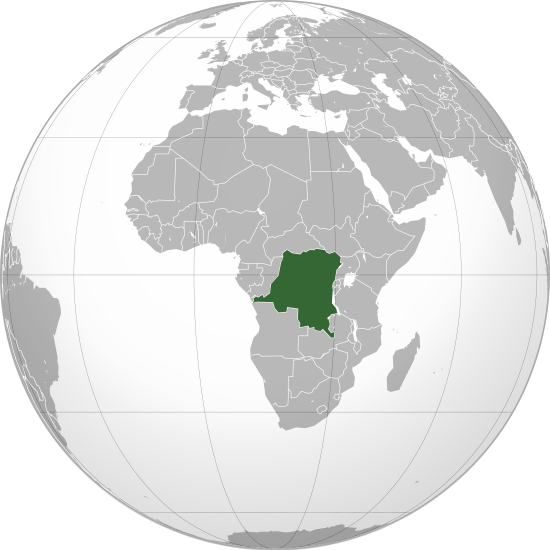
DR Congo city near huge freshwater reservoir, also gets some of Africa's heaviest rain, lets most of one million residents go without running water-AFP


7/13/14, "Water everywhere for DR Congo city yet scarcely a drop to drink," AFP, Albert Kambale, Goma, DR Congo

"Goma, a city in eastern Democratic Republic of Congo, sits by one of the world's largest freshwater reservoirs and has some of Africa's heaviest annual rainfall, yet it is a thirsty place.

Most of the city's one million residents, living close to the shores of Lake Kivu, have to struggle every day to fetch water home. 

From daybreak, an endless stream of cyclists heads to the lake and back, filling battered containers with as much water as they can carry. 

In a makeshift shelter, health worker Fedeline Kabuhu tries to ensure that no container leaves without a dose of chlorine, which she injects with a syringe to make sure the water residents collect is potable. 

"The people drink this water. They do everything with it," the 46-year-old French charity worker said.

A single cyclist can transport up to 120 litres (about 250 pints) to be sold on to private water stores.

At a rate of 10 trips to the lake each day, the carriers can expect to earn up to $10 (seven euros) between dawn and dusk. 

But by the end of one morning it started to rain and water collector Lambert Biriko decided to call it a day. 

"Today is ruined," he said, adding that residents would gather run-off rain water instead and "won't buy anything from us". 

Located on the border with Rwanda, Goma is the capital of DR Congo's North Kivu province, which has been wracked by bloody unrest for more than 20 years, displacing scores of thousands of people.

In those two decades, the city's population has exploded, swelled by an influx of refugees from neighbouring Rwanda and Burundi as well as local Congolese seeking shelter from marauding armed bands. 

- 'A lack of seriousness' -

At the Sports Circle roundabout in the centre of Goma, an old woman washed herself in a puddle next to a pump where lorries fill up with water before transporting it to other neighbourhoods. 

Fiston Mugisho, 20, is unemployed and spends the day washing the few motor-taxis that want to stop. 

He has to buy water from the cyclists each day or walk to another neighbourhood where houses hooked up to the main grid sell what comes out of their taps. 


As in many other parts of DR Congo -- the world's least developed country according to the United Nations -- the people of Goma have learned to fend for themselves after decades of government neglect.

The lack of basic infrastructure has given rise to the Lucha (Fight for Change) protest movement. A shortage of water, electricity and opportunities for work shows "a problem of governance" and "a lack of seriousness", according to Micheline Mwendike, a member of the apolitical body. 

Alongside other organisations, she said, Lucha gathered 3,500 signatures at the end of May for a petition demanding that provincial governor Julien Paluku commit to connecting Goma to the water supply and publish "a plan to bring water to the entire city". 

Backed by regional segments of the political opposition, Lucha is gaining momentum as it accuses authorities of using the insecurity as an excuse for inaction.

- 'Not normal' -

The movement stages regular protests and has harnessed the power of social media, using Facebook and the Twitter hashtag #GomaNeedsWater.

Paluku did not respond to repeated requests for comment from AFP. 

Deogratias Kizibisha, the North Kivu director of public water distribution firm Regideso, said that 45 percent of Goma residents are connected to the central supply. Lucha claims the real rate is closer to 20 percent

Jean-Pierre Kambere is a nurse in Birere, Goma's poorest slum. 

"Adding chlorine is not enough" to make water gathered from Lake Kivu safe to drink, he said.

"Every week patients come to us with diarrhoea or fever" caused by drinking polluted water, Kambere added. 

Not far from the health centre, Joelle, a frail woman of 20, crouched at a public tap, bent double under the weight of the container strapped to her back with a scarf. 

"It's not normal to live like this," she said. "The authorities need to provide water to every home."" image from wikipedia

=======================


.

Saturday, July 12, 2014

FDA has steered millions in tobacco research grants to scientists who advise it on government regulations. Since tobacco regulation was given to FDA in 2009 advisors can influence acceptance of novel and lucrative products such as e-cigarettes-Reuters

7/11/14, "FDA recommendations on tobacco grants prompt transparency concerns," Reuters, Toni Clarke, Washington

"Last year the U.S. Food and Drug Administration recommended that millions of dollars in research grants be awarded to scientists serving on its tobacco advisory committee, even as it rejected several projects deemed by a National Institutes of Health panel to have greater scientific merit, according to confidential scores reviewed by Reuters.

    That has raised hackles among some researchers who were passed over. They argue that FDA officials may have favored the outside experts who counsel the agency on tobacco-related regulatory matters, and that the process lacked transparency.

    Jed Rose, director of Duke University's Center for Smoking Cessation, was one of those who was rejected, despite the relatively strong score given his project by the NIH panel. He has voiced his concerns to the FDA.

    "The close association between the people who recommended which grants should be funded, and the advisers whose grants actually received funding, could have influenced the evaluation process," Rose said in an interview, adding that he was speaking on his own behalf and not for the center he heads.

    The FDA says no favoritism was involved. David Ashley, director of the office of science within the FDA's tobacco division, said the awards to the advisory committee members was "purely coincidental."

    Ashley declined to elaborate on why one project was recommended over another, saying to do so would breach confidentiality. But he said it is not unusual for scientists, including those on government advisory committees, to receive research funding since they are typically leaders in their field.

    A spokeswoman for the NIH, which administers the grants, said that while funds typically go to the best-scoring proposals exceptions may be made if a particular research niche needs to be filled. Ashley said that is what happened in this case.

    Still, some independent experts said that in the absence of any detailed rationale for the recommendations, it is legitimate for the researchers who were passed over to raise questions about the process.

    "It has an odor of insiderness and friendliness," said Dr. Jerome Kassirer, distinguished professor of medicine at Tufts University School of Medicine and former editor-in-chief of the New England Journal of Medicine.


SHAPING REGULATION

    The grants were awarded in September in conjunction with the NIH to help the FDA shape tobacco regulations at a time of sweeping change in the industry. The agency is poised to regulate the nascent e-cigarette industry for the first time, yet many questions remain unanswered about the products' risks and benefits.

    The funding includes an initial $53 million, potentially rising to more than $273 million over five years.

    More than 50 research proposals were reviewed by an independent NIH panel, which scored each application based on its scientific and technical merit.

    Among the grant recipients were teams that include Thomas Eissenberg, professor of psychology at Virginia Commonwealth University; Suchitra Krishnan-Sarin, associate professor of psychiatry at the Yale School of Medicine and Dr. Jonathan Samet, a professor at the Keck School of Medicine at the University of Southern California.

    All three are members of the FDA's tobacco advisory committee, which has seven voting members and has met as many as 12 times a year since 2009, when the Tobacco Control Act gave the FDA the authority to regulate tobacco for the first time
.
    What bothers critics is that the proposals from Virginia Commonwealth and Yale were deemed by the NIH review panel to have less scientific merit than rival proposals from Duke and SRI International which were rejected, according to documents reviewed by Reuters and interviews with researchers.

    Neither Virginia Commonwealth's Eissenberg nor Yale's Krishnan-Sarin would comment on their scores. USC's Samet confirmed that his score was better than the one received by Duke. The FDA and NIH declined to comment on individual scores, citing confidentiality.

    David Abrams, executive director of the Schroeder Institute for Tobacco Research and Policy Studies, who applied for a grant but was rejected due to what he conceded was an "awful score," said the FDA's recommendations in favor of its advisers were not necessarily unreasonable.

    "You could argue that it's not totally surprising because they are some of the best scientists," he said. Still, he added, "it certainly does look a little odd."

ON MERIT ALONE?

    The FDA's explanation does not satisfy [Duke's] Rose, who in a September letter to the agency argued that it was critical for its Center for Tobacco Products to be specific and transparent about the objective criteria underlying its recommendations.

    "Working closely with CTP in an official advisory capacity creates an aura of greater-than-usual regard and credibility that could lead CTP to value the applications of these individuals more than they would otherwise judge, based on merit alone," he wrote.

   Since some scores were skipped over, "what otherwise would have served as protection against bias on the part of CTP was abrogated," he added.

    In an October letter of response, Ashley told Rose that the awards were based on the scientific and technical merit of the project, the availability of funds, and the relevance of the proposed project to the agency's priorities. The overall score, Ashley said in the letter, which was reviewed by Reuters, "was not the sole determinate for funding recommendations."

    According to publicly available synopses of the proposals that received funding, Virginia Commonwealth's research focuses on analytical methods for evaluating whether novel products such as e-cigarettes are any healthier than traditional cigarettes, while the Yale project focuses on the impact flavors may have on initiating and maintaining tobacco addiction.

    Duke's proposal, which is not publicly available but was provided to Reuters by Rose, would have evaluated the role of an array of tobacco constituents in promoting nicotine addiction and would have studied the role of menthol in vulnerable populations, including African American smokers, among whom menthol cigarettes are popular.

    All three proposals appear to have addressed areas of research previously identified by the FDA as key. SRI International declined to discuss its project."

==================

Comment to Reuters article:

"SimplyHot wrote:

State corruption?! Here we have the F.D.A. selling research grant money right out in the open!"


.


Thursday, July 10, 2014

China admits trading in tiger skins during Endangered Species Convention. Skins of tigers, leopards and snow leopards are prized by China's political, military and business elite as luxury home decor-BBC. Where is Leonardo Di Caprio?

7/10/14, "China ‘for the first time admits' trading in tiger skin,"

China has for the first time admitted that it permits trade in skins from captive tigers, participants and officials at a meeting of an international convention to protect endangered species have said.

They say Chinese authorities had never before reported this.


"We don't not ban trade in tiger skins but we do ban trade in tiger bones," a participant at the meeting said.

Between 5,000 and 6,000 tigers are believed to be in captivity in China. 

The admission was made by a member of the Chinese delegation at a Convention of International Trade in Endangered Species (Cites) meeting in Geneva.

Chinese officials have not responded to a BBC request as to the details of the statement. Officials say a major report - with graphic details on how the Chinese government allows commercial trade in skins from captive tigers- was presented during the meeting.

Wildlife experts believe "tiger farming" in China has hugely fuelled demand for poaching and trafficking of the endangered species from elsewhere.

They say that the Chinese admission about the tiger skin trade will help pile pressure on the government to eradicate the practice. Reports also say that facilities where captive tigers are held are "leaking tiger parts and live animals" for illegal international trade.

"The report presented in the meeting created a situation that required China to respond," said one participant, who did not want to be named....

"It was the first time they admitted officially that this trade exists in China."

It is estimated that about 1,600 tigers - in captivity and in the wild - have been traded globally since 2000.

Reports say that in the past two years, there have been seizures of nearly 90 tigers likely to have been sourced from, or trafficked though, captive facilities across South East Asia and China. 

While China has been a major market for tiger parts, wildlife experts say that Vietnam, Thailand, Laos, Cambodia, Malaysia and Indonesia are also emerging as "tiger farming" countries.

Skins of tigers, leopards and snow leopards are valued among the political, military and business elite as luxury home decor in China."

Image: "Critics say that China's experiment in licensing the domestic trade in skins of captive tigers has done nothing to alleviate pressure on wild tigers." ap via BBC 


.

Toledo solar panel maker Xunlight abruptly shuts down, can't make payroll-Toledo Blade

7/10/14, "Solar-panel maker shuts down," "Dozens out of work as Toledo’s Xunlight abruptly closes doors," Toledo Blade, Nolan Rosenkrans

"A Toledo solar-panel manufacturer has shut down and dozens of employees are out of work.

Xunlight Corp., a flexible solar-panel manufacturer that uses technology developed at the University of Toledo and is based on Nebraska Avenue, closed its doors June 30 to “resolve some matters,” CEO John Buckey said. Mr. Buckey declined to elaborate on the cause of the shutdown, but a letter provided to The Blade that appears to have been sent by Mr. Buckey to employees on July 2 said the company is closing and makes no reference to any potential reopening.

Unfortunately, payments that were committed to be paid to Xunlight contractually have not been sent as agreed, and the company does not have the funds necessary to meet its obligations, including this week’s payroll, and to continue its operations,” the letter states. “Furthermore, there are no prospects for obtaining additional funding.”

Calls to most phone numbers at Xunlight go straight to voice mail. 

There were three cars in its parking lot Tuesday, and there was no receptionist at the front desk or apparent signs of activity at the facility. Mr. Buckey estimated that the company employed about 40 people.

Xunlight’s connections to UT run deep.

The company was founded by Xunming Deng, a UT professor of physics, and his wife, Liwei Xu, based on technology he developed while at UT. He started a holding company called Midwest Optoelectronics LLC in 2002; the company’s main asset was an ownership stake in what would become Xunlight.

The holding company was licensed the technology by UT, and it then sublicensed the technology to Xunlight. Mr. Deng was chief executive officer and board chairman of Xunlight until March, 2012.

University of Toledo Innovation Enterprises received about $5 million of equity in 2008 from the University of Toledo Foundation; most of that equity was stock in the holding company. UTIE also made a $3 million investment in solar-panel maker Xunlight, according to UT records. It ultimately forgave $1 million of its investment, and received ownership of one of Xunlight’s manufacturing lines in exchange.

“We would certainly be disappointed if the company left Toledo for another region, but we remain optimistic that the UT technology licensed to Xunlight will continue to pay dividends in other applications in the near future,” Rhonda Wingfield, UTIE chief executive officer, said in a statement.

When asked if UT believed Xunlight planned to move its operations outside of Toledo, a university spokesman said only that “we would certainly be disappointed if it did.”

Mr. Deng did not return a call requesting comment.

Some investors in Xunlight and MWOE knew little of the closure until asked about it by The Blade. Bob Savage, Jr., of Rocket Ventures said Xunlight representatives had been hard to reach in recent weeks, but that he did not believe the company was dead. Rocket Ventures is a venture capital fund run by the Toledo Regional Growth Partnership; it previously was jointly run with the university.

Bo Lee, a Colorado-based investor in MWOE, said a shutdown didn’t surprise him. Mr. Lee filed a lawsuit earlier this year claiming Mr. Deng defrauded investors when he negotiated a financial restructuring and the sale of some assets to his own benefit and to the detriment of one of the companies.

Starting in 2011, according to the lawsuit, Xunlight began negotiations with MWOE to reduce its ownership stake in Xunlight in exchange for a cash infusion by investors to stave off bankruptcy. Xunlight also planned to divest itself of its Asian operations that were in China.

Xunlight Asia, Mr. Lee claims, was supposed to be sold to Midwest as part of its compensation for reducing its ownership stake in Xunlight. Mr. Lee claims Xunlight instead sold its Asian operation at a lower price to XL Technology Holdings, a British Virgin Islands company Mr. Deng owned.

Meanwhile, MWOE reduced its ownership stake in Xunlight from 51 percent to less than 7 percent.

At the time of the negotiations, Mr. Deng was chairman and CEO of MWOE and Xunlight Asia, and was thus in a position to influence the negotiations, according to the lawsuit. He has denied Mr. Lee’s claims.

With Xunlight potentially out of business in the United States, Mr. Deng would be able to fill the market void, and with much lower operational costs, Mr. Lee said.

“If Xunlight U.S. goes away, [Deng] is free, and the cost from manufacturing in [China] is much less,” Mr. Lee said. “He can probably buy the assets here at a deep discount, because no one else will have a use for it.”" via Lucianne


.


Wednesday, July 9, 2014

EU in talks with US to force US taxpayers to transfer .5 of what remains of US GDP to EU parasites in the form of evil crude oil and gas resources-EU Observer

7/9/14, "Leaked paper: EU wants 'guaranteed' access to US oil and gas," EU Observer, Benjamin Fox, Brussels

"The EU wants the US to lift its restrictions on exporting gas and crude oil as part of ongoing trade talks, according to a leaked European Commission document.

The strategy paper by the EU executive, obtained by the Washington Post, calls for “a legally binding commitment … guaranteeing the free export of crude oil and gas resources”
.
EU and US trade officials will hold their sixth round of talks on an ambitious Transatlantic Trade and Investment Partnership (TTIP) in Brussels next week, which officials argue could be worth €100 billion per year, equivalent to an additional 0.5 percent of EU GDP.

Although a trade deal, which negotiators hope to finalise in 2015, would probably scrap most of the remaining tariff barriers between the two blocs, the real value of an agreement would lie in harmonising regulation and sharing raw materials.

Including a chapter on energy in the deal is a key priority of EU officials. The leaked paper argues that “it should not be difficult to establish a chapter with rules on trade and investment in energy and raw materials.”

At the top of the EU’s demands is for Washington to scrap its requirement to review whether exports are in the public interest before approving any foreign sales, “transforming any mandatory and non-automatic export licensing procedure into a process by which licenses for exports to the EU are granted automatically and expeditiously”.

The EU is anxious to reduce its reliance on Russian gas and oil imports, fears which have been heightened by the ongoing crisis in Ukraine.

It has also long-stated its wish to have easy access to the abundance of US natural gas and crude oil created by the country’s recent shale boom.

A number of EU countries have large deposits of shale gas in their own soil, but most have so far been reluctant to start exploiting it because of environmental concerns about the fracking process which extracts the fossil fuels.

“The current crisis in Ukraine confirms the delicate situation faced by the EU with regard to energy dependence,” the paper notes.

But exporting natural gas could push up prices for ordinary Americans and businesses, who have benefited from a 50 percent fall in energy prices over the past five years, and US negotiators have so far refused to drop their restrictions.

The Commission paper acknowledges the US’s reticence, conceding that “the US has also been hesitant to discuss a solution for US export restrictions on natural gas and crude oil in the TTIP”.

“We have only noticed some limited opening on the US side…a clear agreement to discuss a comprehensive chapter on energy and raw materials is still lacking,” it adds.

Environmental campaigners were swift to denounce the EU plans. 

In a statement on Tuesday (8 July), Natacha Cingotti, a spokesperson for Friends of the Earth, accused the bloc of attempting to “trade away regulations that protect us from dangerous climate change”.

For her part, Ilana Solomon, a director of the Sierra Club, a US-based NGO, commented that “the EU wants a free pass to import dirty fossil fuels from the US”."


.

No drought in the Beltway, Orioles at Nationals postponed by rain


7/8/14, "The orange sky is reflected in a puddle during a rain delayed start of an interleague baseball game between the Washington Nationals and the Baltimore Orioles at Nationals Park, Tuesday, July 8, 2014, in Washington," ap. Postponed due to rain. "Orioles, Nationals postponed by rain Tuesday night, makeup Aug 4," ap


.

Tuesday, July 8, 2014

California marijuana industry is devastating wildlife and the environment. The larger and more profitable segment of the Calif. marijuana market is illegal, law enforcement predicts crime will rise as residents and growers compete for water, residents to survive and growers to profit-NBC News

7/7/14, "Water-Guzzling Pot Plants Draining Drought-Wracked California," NBCnews.com, Harriet Taylor

"California cannabis growers may be making millions, but their thirsty plants are sucking up a priceless resource: water. Now scientists say that if no action is taken in the drought-wracked state, the consequences for fisheries and wildlife will be dire. 

"If this activity continues on the trajectory it's on, we're looking at potentially streams going dry, streams that harbor endangered fish species like salmon, steelhead," said Scott Bauer of the California Department of Fish and Wildlife. 

Studying aerial photographs of four watersheds within northern California's so-called Emerald Triangle, Bauer found that the area under marijuana cultivation doubled between 2009 and 2012. It continues to grow, with increasing environmental consequences. 

Bauer presented data to CNBC indicating that growers are drawing more than 156,000 gallons of water from a single tributary of the Eel River, in Mendocino County, every day
.

The average marijuana plant needs about 6 gallons of water a day, depending on its size and whether it's grown inside or outside, according to a local report that cited research. Pot growers object to that number, saying that the actual water use of a pot plant is much less. 

Although the marijuana business has helped revive the local economy, residents may now be feeling the effects of living alongside growers. And, as growers—some legal, some not—face a severe drought, local law enforcement officers expect the fight over natural resources to intensify. 

"I never want to see crime increase, but I have a feeling it will, because of the commodities that are up here," said Humboldt County Sheriff Mike Downey. "When we get to the end of the grow season, which is August and September, the need for enhanced water availability is gonna be there, and I don't think the water's going to be there, so you're going to see people, I believe, having some conflict over water rights." 

Stream water rules in California are the same for growers of marijuana as they are for growers of any crop: Growers should divert no more than 10 percent of a stream's flow, and they should halt diversion altogether during late summer, when fish are most vulnerable to low water levels. But Bauer pointed out that those rules apply to permit holders, and most marijuana growers haven't bothered to get permits. 

With so much of California's cannabis business operating in the more lucrative underground market, and with so many growers across the region, the California Department of Fish and Wildlife and the Humboldt County Sheriff's office say they lack the resources to take action against all offenders. So they target the most egregious. 

"We get those calls daily. People are upset. Somebody has dried up a stream, somebody is building a road across sensitive fish and wildlife habitat, so that is happening on a daily basis," Bauer said. "And we do our best with the personnel we have to respond to those calls."

Sheriff Downey concurred with Bauer about the manpower challenge authorities face.

"We have a very active marijuana unit that is out there, especially during the grow season. But we have so many grows here that we have a hard time keeping up or making a valiant dent in the marijuana growing in the county," said Downey.

"With the increase in water usage and pressure upon that, that lucrative business becomes even more lucrative because the price of the marijuana, the value of it, goes up even though we've had a glut on the market the last few years," he added.

One increasingly popular solution among some growers is the collection of rain water during the wetter, winter months that they can use to water crops during the dry, summer season.

"As long as cannabis farms remain small and decentralized, there's no reason why we can't grow everything we need to meet the state's demands using all stored rain water," says Hezekiah Allen, an environmental consultant and director of public affairs for the Emerald Growers Association.

And for some, it's a business opportunity.

"I've heard people shut down their grow operations, bought water trucks and have changed from growing to supplying waters to the other growers," said Chip Perry, a consultant for MC2, a service that helps people obtain medical marijuana cards."


.

Followers

Blog Archive

About Me

My photo
I'm the daughter of an Eagle Scout and World War II Air Force pilot born in Brooklyn, finally settling in New Jersey.